

|
Reviewed by: Insurance Cornerstone Editorial Board
|
Fact-Checked: NAIC & Statutory Regulatory Standards
Navigating modern automotive insurance requires a granular understanding of first-party physical damage coverages. While state statutory mandates universally emphasize third-party bodily injury and property damage liability to protect other motorists, vehicle owners bear the sole financial responsibility for physical harm sustained by their own vehicles. Within standard personal auto policies (PAP), physical damage protection bifurcates into two distinct mechanisms: collision coverage and comprehensive coverage, historically termed other-than-collision (OTC) coverage. Selecting appropriate deductible thresholds, understanding loss valuation methodologies, and establishing optimal coverage limits dictate whether an unexpected incident results in prompt financial restoration or devastating out-of-pocket financial liability.
Automobile claims frequency and severe severity cycles have surged across the United States over recent regulatory reporting periods. Data compiled by the National Association of Insurance Commissioners (NAIC) underscores that escalating repair costs, sophisticated vehicular sensor arrays, and supply chain constraints have inflated average collision loss payments significantly. Concurrently, environmental extremes, vehicular theft rings, and animal strike frequencies have driven comprehensive claim severities to historic highs. Policyholders who mistakenly conflate these distinct operational agreements risk severe coverage denials when adjusters evaluate loss causation under strict policy exclusions.
The distinction between an impact with another vehicle and an unexpected tree limb strike involves intricate legal definitions of proximate cause, mechanical failure exclusions, and contract warranty interpretations. Policyholders must balance the mathematical reality of premium expenses against vehicle depreciation curves, loan-to-value ratios, and personal liquidity buffers. When a vehicle sustains severe physical harm, insurance adjusters deconstruct the event through formal claims investigation frameworks established under state insurance codes and standard policy contracts.
This comprehensive technical treatise examines the fundamental engineering, legal frameworks, and underwriting realities governing comprehensive and collision coverages. By dissecting policy jacket provisions, loss valuation calculations, subrogation rights, and deductible optimization strategies, vehicle owners can formulate an airtight risk mitigation portfolio that withstands rigorous claims adjustment procedures and eliminates financial vulnerability.
Statutory Foundations and Contractual Definitions of First-Party Physical Damage
First-party physical damage coverage in the standard ISO Personal Auto Policy operates under Part D, titled Coverage for Damage to Your Auto. Unlike liability coverage, which indemnifies third parties for tort liabilities incurred by the insured driver, Part D establishes a contractual obligation wherein the insurer agrees to pay for direct and accidental loss to a covered auto or any non-owned auto, minus the deductible stated in the policy declarations. Understanding the precise legal meaning of ‘direct and accidental loss’ forms the bedrock of claims jurisprudence. A direct loss implies immediate physical damage caused without an intervening, independent cause, while accidental signifies an unforeseen, unintended event occurring from the perspective of the policyholder.
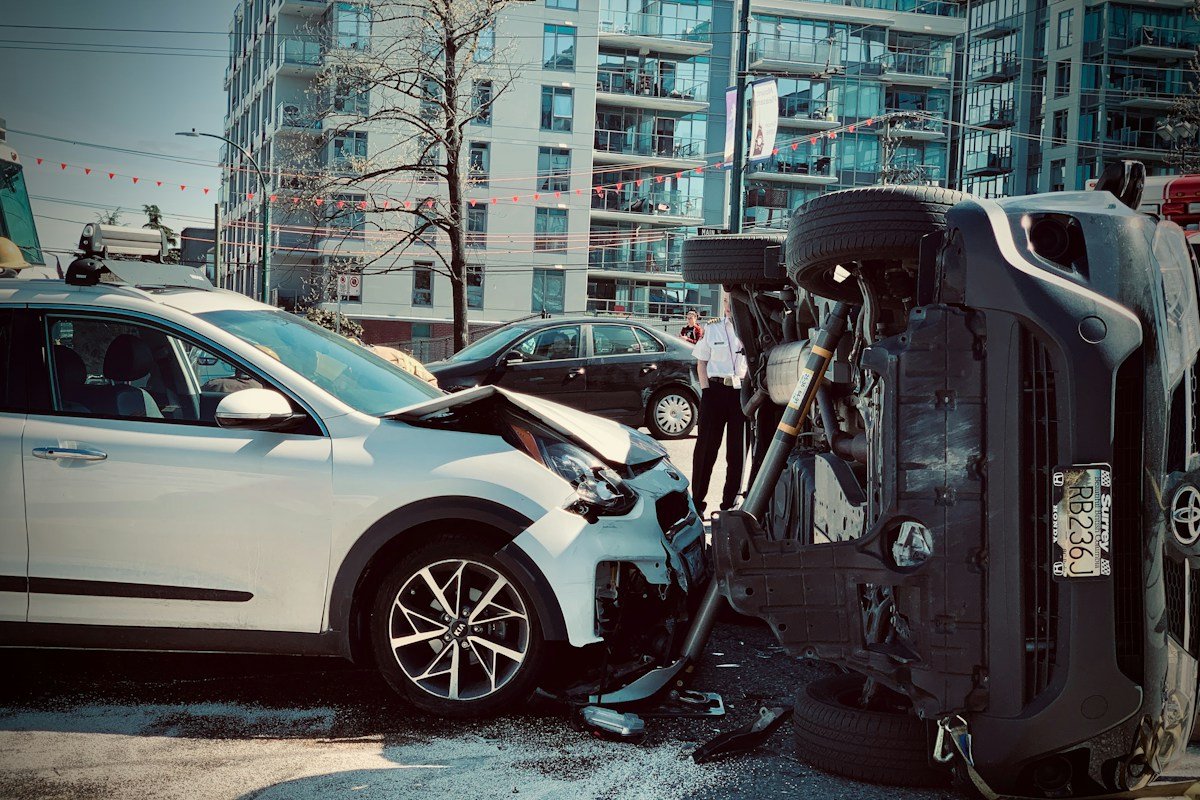
Collision coverage is legally defined within policy jackets as the upset of your covered auto or non-owned auto, or its impact with another vehicle or object. The term ‘upset’ encompasses rollovers, flips, and loss of directional stability where gravity causes vehicular structural deformation against the roadway surface or terrain. An ‘object’ includes static physical entities such as guardrails, telephone poles, fallen boulders, concrete barriers, potholes, and buildings. Crucially, when an insured vehicle impacts another conveyance, whether moving or stationary, the loss is unequivocally classified as a collision, invoking the dedicated collision deductible and specific underwriting loss metrics.
Comprehensive coverage functions under the negative definition principle: it encompasses direct and accidental physical loss caused by perils other than collision, alongside specifically enumerated perils that might otherwise mimic an impact. Standard ISO wording explicitly classifies strikes with birds or animals, falling objects, explosion, earthquake, windstorm, hail, water, flood, malicious mischief, vandalism, riot, civil commotion, contact with bird or animal, or breakage of glass as comprehensive claims. This explicit categorization is vital: if a deer leaps into the path of a moving vehicle, the physical impact is classified contractually as a comprehensive loss, sparing the insured a surcharge associated with at-fault collision incidents.
The contractual dichotomy between collision and comprehensive coverage establishes mutual exclusivity in the claims adjudication process. An adjuster cannot apply both deductibles to a single proximate peril. If high winds sever a mature oak branch that falls onto a parked vehicle, comprehensive coverage applies. Conversely, if that same oak branch rests stationary on the highway asphalt for several hours and a driver strikes it at highway speed, the adjuster must scrutinize whether the branch constituted an active falling object or a stationary roadway obstacle, directly altering whether collision or comprehensive deductible terms govern the settlement.
Actuarial Risk Modeling, Loss Cost Analytics, and Underwriting Economics
Actuarial determination of collision and comprehensive premium rates relies on sophisticated multivariate loss modeling and catastrophe exposure algorithms. The Insurance Information Institute (III) demonstrates that collision losses exhibit strong correlation with vehicle usage density, metropolitan traffic congestion indices, driver age cohorts, moving violation histories, and annual vehicle miles traveled (VMT). Because human error, distracted driving, and excessive velocity cause the overwhelming majority of vehicle-to-vehicle impacts, collision coverage is priced primarily as a behavioral, operational risk profile subject to experience rating and individual underwriting scrutiny.
Comprehensive coverage pricing operates under radically distinct actuarial paradigms grounded in geographic vulnerability, meteorological historical indices, and property crime statistics. An automobile garaged in an urban zip code with rampant catalytic converter theft, vehicle break-ins, and civil unrest experiences heavily weighted comprehensive base rates regardless of whether the owner maintains an unblemished thirty-year driving history. Similarly, policyholders residing along the Central Plains hail corridors or coastal hurricane belts absorb substantial catastrophe loads due to the inevitability of convective storms capable of totaling thousands of garaged and ungaraged vehicles within minutes.
Underwriting models assign specific Vehicle Rating Groups (VRGs) to every make, model, and trim package based on empirical repair cost indices and part replacement realities. Modern automotive engineering incorporates advanced driver-assistance systems (ADAS) consisting of millimeter-wave radar units, ultrasonic proximity sensors, forward-facing stereoscopic cameras, and lidar units embedded directly within front bumpers, grilles, and windshield glass. Consequently, low-speed minor collisions that once incurred 500 dollars in structural sheet metal pounding now demand 4,000 dollars in sensor replacement and specialized dynamic optical recalibration, driving collision loss severity trends steeply upward across all carrier loss ratios.
To preserve solvency and target underwriting profit margins, carriers execute continuous loss cost adjustments. Collision rates reflect individual driver loss history reports, Comprehensive Loss Underwriting Exchange (CLUE) records, and credit-based insurance scores where permitted by state statutes. Comprehensive rates, conversely, remain largely non-surchargable following a single loss event in most jurisdictions, recognizing that animal collisions, weather events, and random vandalism fall outside the active behavioral control of the vehicle operator. This regulatory distinction heavily influences how consumers should approach deductible selection and reporting protocols.
Deconstructing Collision Coverage: Mechanical Dynamics and Causation Analysis
Evaluating collision coverage requires analyzing the mechanical dynamics of vehicular impacts and legal theories of proximate cause. When an insured operator loses control of a vehicle on an icy overpass, strikes a median barrier, spins across three lanes of traffic, and collides with an embankment, the series of events represents a single continuous collision loss governed by a single deductible. The impact with the barrier, the subsequent spin, and the final impact with the embankment are indivisible components of the initial loss of control, provided no intervening, independent negligence severed the chain of causation.
A contentious area of collision adjudication involves pothole damage. When a wheel strikes a deep pothole at 45 miles per hour, fracturing the alloy wheel rim, puncturing the tire sidewall, bending the control arm, and destroying the strut assembly, insurers classify the event as a collision with a roadbed depression. Because the roadway constitutes an object, the impact meets the contractual definition of collision. Policyholders who only maintain comprehensive coverage face outright denials for pothole damage. Furthermore, adjusters must separate direct collision damage from pre-existing mechanical wear and tear, refusing to replace worn ball joints or corroded suspension elements that preceded the impact.
Rollover dynamics represent another critical collision scenario. An upset occurs the moment a vehicle tilts beyond its center of gravity equilibrium, causing the roof, pillars, or side panels to absorb impact energy. Modern rollover claims frequently involve total loss determinations due to catastrophic unibody distortion. Even if a vehicle appears cosmetically repairable following a rollover, structural pillar deformation compromises the crashworthiness parameters certified by Federal Motor Vehicle Safety Standards, compelling carriers to classify the vehicle as structurally unrepairable to avoid future product liability exposure.
Single-vehicle impacts with debris present complex evidentiary challenges. If a commercial dump truck ahead sheds gravel that directly impacts a following vehicle windshield while still suspended in the air, the loss is deemed a falling or flying object under comprehensive coverage. However, if that gravel hits the roadway asphalt, comes to rest, and is subsequently kicked up by the tires of a third vehicle into the windshield, adjusters may argue the stone became a stationary object, creating disputed coverage interpretations between collision and OTC units. Detailed dashcam footage and contemporaneous police accident reports serve as invaluable documentary evidence during such disputes.
Deconstructing Comprehensive Coverage: Atmospheric, Animal, and Criminal Perils
Comprehensive coverage serves as an expansive umbrella protecting against non-operational hazards that occur while a vehicle is parked, garaged, or operating outside typical vehicular impact scenarios. Foremost among these perils is atmospheric damage caused by severe convective storms. Hailstones measuring one to three inches in diameter inflict severe localized dimpling across hoods, roofs, and trunk decks. In severe storms, hailstones shatter laminated glass windshields and tempered side windows, allowing torrential rain to flood passenger cabins and short-circuit delicate powertrain control modules. Such damage is exclusively adjusted under comprehensive terms, subject to dedicated weather catastrophe reserves.
Animal strikes constitute a legally protected category within comprehensive coverage. Under standard ISO policy forms, colliding with a deer, elk, moose, cow, or domestic animal is contractually defined as a comprehensive loss. This classification provides enormous financial protection to motorists: comprehensive claims rarely trigger insurer premium surcharges, preserving preferred tier underwriting statuses. However, a crucial caveat emerges: if an operator swerves abruptly to avoid a deer, misses the animal entirely, and strikes a roadside guardrail or concrete abutment, the loss is legally classified as an at-fault collision with an object. Drivers must understand that evasive maneuvers resulting in non-animal impacts legally transmute the peril into a collision claim.
Automotive theft, total vehicular disappearance, and localized criminal mischief fall squarely under comprehensive coverage. Total theft scenarios activate dedicated policy conditions, including a mandatory waiting period, typically forty-eight hours, before the carrier initiates rental car reimbursement or issues a total loss payout. If law enforcement recovers the vehicle within this investigative window, the comprehensive adjuster evaluates stripping damage, physical abuse, biological contamination, and mechanical stress sustained while in the perpetrator possession. Partial thefts, including the illicit excision of catalytic converters, alloy wheels, high-intensity discharge headlights, and infotainment modules, are indemnified under comprehensive coverage subject to the selected deductible.
Vandalism and civil unrest perils protect vehicle owners from intentional third-party property destruction. Keying incidents, spray-painted graffiti, slashed tires, shattered side glass, and intentional arson represent typical comprehensive losses. Crucially, when multiple tires are slashed simultaneously, standard policies apply a single comprehensive deductible across the aggregate loss. However, adjusters rigorously inspect tread depth and wear patterns to ensure depreciation offsets, known as betterment deductions, are applied fairly to consumable components like performance tires.
Valuation Methodologies: Actual Cash Value, Replacement Cost, and Diminution in Value
The settlement of physical damage claims hinges entirely on contractual valuation clauses. The overwhelming majority of personal auto insurance policies stipulate that insurer liability is capped at the lesser of two amounts: the actual cash value (ACV) of the damaged property at the time of loss, or the amount necessary to repair or replace the property with parts of like kind and quality. Unlike commercial buildings or high-value residential properties that may feature guaranteed replacement cost endorsements, personal vehicles are depreciating assets, and carriers calculate settlements strictly based on depreciated market value.
Actual cash value is legally defined as replacement cost minus physical depreciation, mechanical wear and tear, and pre-existing damage. To establish ACV in a total loss settlement, auto insurers rarely utilize consumer retail guides like Kelley Blue Book or Edmunds without adjustment. Instead, carriers contract specialized valuation vendors such as CCC Intelligent Solutions, Mitchell International, or Audatex. These platforms scrape active dealer listings, historical transaction data, and regional private sales across comparable vehicles (comps) sharing identical year, make, model, trim, mileage, and optional equipment parameters within a specified geographic radius.
When an insurer calculates repair costs, policy language universally permits the utilization of aftermarket parts, formally known as non-OEM (Original Equipment Manufacturer) parts, as well as reconditioned or salvaged components. Consumers frequently demand OEM parts, particularly for newer vehicles, but carriers contractually fulfill their obligation by providing parts that meet certified fit, form, and safety criteria established by the Certified Automotive Parts Association (CAPA). Policyholders desiring strictly brand-new manufacturer components must purchase specific OEM endorsement riders at additional policy premium.
Diminution in value represents the loss of market value a repaired vehicle suffers simply by virtue of having an accident history documented on vehicular databases like Carfax or AutoCheck. Third-party liability claims routinely recognize inherent diminished value damages in many jurisdictions under tort law. However, standard personal auto policies explicitly exclude first-party inherent diminished value under comprehensive and collision coverages, a precedent reinforced by landmark supreme court decisions across multiple states, except Georgia where first-party diminished value remains recoverable under specific statutory mandates.
The Total Loss Threshold: Structural Integrity and Economic Viability
When physical damage is extensive, carriers must determine whether to authorize repair operations or declare the vehicle a constructive total loss. A constructive total loss occurs when the cost of restoring the vehicle to its pre-loss structural and operational condition, combined with supplemental salvage value recovery, exceeds the vehicle actual cash value. State insurance departments govern total loss declarations through two prevailing regulatory mechanisms: statutory total loss thresholds and the Total Loss Formula (TLF).
Under a statutory percentage threshold framework, state legislatures dictate an explicit mathematical percentage beyond which a vehicle must be branded as salvage and totaled. For instance, in states enforcing a 75 percent threshold, if a vehicle with a 20,000 dollar ACV sustains 15,001 dollars in documented repair estimates, the insurer is statutorily barred from authorizing repairs and must execute a total loss settlement. Thresholds vary widely across states, ranging from 60 percent in Oklahoma and 70 percent in Iowa to 80 percent in Florida, while states like Texas enforce a 100 percent repair-to-value threshold before mandatory branding occurs.
In states lacking an explicit percentage mandate, insurers employ the Total Loss Formula: Cost of Repair plus Projected Salvage Value must equal or exceed Actual Cash Value. Because auction salvage pools like Copart and IAA fetch aggressive bids for late-model salvage units with intact powertrains or valuable battery packs, high salvage values accelerate total loss determinations. If a modern hybrid vehicle with an ACV of 30,000 dollars sustains 18,000 dollars in body damage, but its specialized high-voltage lithium battery pack and undamaged drivetrain command a 14,000 dollar salvage bid at auction, the combined sum of 32,000 dollars exceeds the ACV, compelling the carrier to total the vehicle.
When a total loss declaration is finalized, title transfer mechanics commence. The insurer pays the insured the established ACV plus applicable state sales tax, title transfer fees, and registration costs, minus the policy deductible. If an outstanding auto loan or lease exists, the insurer must issue the settlement draft jointly to the policyholder and the designated lienholder. In situations where vehicle depreciation outpaces loan amortization schedules, an underwater financing balance arises, exposing the consumer to financial devastation unless protected by specialized Guaranteed Asset Protection (GAP) insurance.
Guaranteed Asset Protection (GAP) Interoperability and Negative Equity Hazards
Guaranteed Asset Protection operates as an indispensable auxiliary contract designed to bridge the severe fiscal divide between primary insurance total loss settlements and outstanding financing obligations. Over recent credit cycles, automotive loan terms have expanded aggressively, with 72-month, 84-month, and even 96-month financing contracts becoming standard retail practice. These extended amortization schedules, coupled with minimal down payments and the rolling over of negative equity from previous trade-ins, guarantee that a vehicle fair market value will fall significantly below the loan payoff balance during the initial 36 to 48 months of ownership.
Consider an operational scenario where a consumer purchases a new sport utility vehicle for 48,000 dollars with zero down payment, financing 52,000 dollars to cover sales tax, dealer fees, and warranties. Eighteen months into the loan term, the vehicle is involved in a severe highway collision resulting in a constructive total loss. The primary insurer values the vehicle actual cash value at 36,000 dollars based on regional depreciation trends. After applying a 1,000 dollar collision deductible, the primary carrier issues a settlement payment of 35,000 dollars directly to the financial institution holding the lien.
However, the remaining loan payoff balance at that exact chronological moment stands at 44,000 dollars. Without GAP protection, the vehicle owner is legally bound to pay the 9,000 dollar deficiency balance immediately out of pocket to satisfy the promissory note, despite having no operational vehicle to show for it. When an active GAP endorsement or standalone policy exists, the GAP carrier absorbs this 9,000 dollar deficiency balance, and many standalone contracts will additionally reimburse the 1,000 dollar primary collision deductible, insulating the insured from unrecoverable personal capital loss.
Consumers must exercise due diligence regarding the source and contractual terms of GAP coverage. GAP insurance purchased directly through an automotive dealership is frequently rolled into the financing principal at highly inflated prices, accruing compounded interest charges over the loan duration. Conversely, obtaining a loan/lease payoff endorsement directly through a personal auto insurer typically costs a fraction of dealership fees, often adding merely 20 to 40 dollars annually to the primary policy premium. Policyholders must verify whether their specific GAP contract incorporates loan-to-value caps, typically 125 percent or 150 percent of MSRP, which could leave residual balances if negative equity was rolled into the purchase.
Deductible Optimization: Actuarial Equilibrium and Financial Liquidity Analysis
Selecting deductible levels for collision and comprehensive coverages represents a foundational risk retention decision. A deductible is the pre-agreed contract amount that the policyholder must absorb out of pocket before the insurer assumes liability for covered loss costs. In physical damage claims, deductibles operate on a per-occurrence basis, meaning that if a vehicle sustains collision damage in January and hail damage in May, the insured must satisfy two separate deductibles. Common deductible intervals range from 250 dollars to 2,500 dollars, with 500 dollars and 1,000 dollars serving as industry benchmark thresholds.
The mathematical relationship between deductible limits and policy premiums is non-linear and governed by actuarial claim frequency curves. Increasing a collision deductible from 250 dollars to 500 dollars yields a substantial percentage reduction in annual premium because it eliminates the carrier administrative exposure to small, frequent fender-bender claims. Moving from 500 dollars to 1,000 dollars delivers further meaningful savings, though the marginal rate reduction begins to flatten. Transitioning beyond 1,000 dollars to 2,000 dollars rarely provides commensurate premium relief relative to the massive expansion in personal risk exposure.
To identify the optimal actuarial equilibrium, policyholders should calculate the payback period for each incremental deductible elevation. If increasing a collision deductible from 500 dollars to 1,000 dollars generates an annual premium savings of 125 dollars, the policyholder assumes 500 dollars in additional financial risk to capture that savings. Dividing the 500 dollar risk differential by the 125 dollar annual savings reveals a payback period of precisely 4.0 years. If the insured maintains a clean driving record and avoids collision claims for longer than 48 months, the retained premium savings surpass the additional out-of-pocket exposure, yielding net financial gain.
A crucial strategic configuration involves decoupling comprehensive and collision deductibles. Because comprehensive coverage carries lower claim severity risk from a moral hazard perspective, insurers price comprehensive coverage at a fraction of collision premiums. Consequently, maintaining a low 100 dollar or 250 dollar comprehensive deductible alongside a higher 1,000 dollar collision deductible is an exceptionally cost-effective risk management strategy. This asymmetrical setup protects the insured against zero-fault events like cracked windshields, vandalized mirrors, or hail dimpling without imposing heavy monthly premium burdens.
Subrogation Mechanics, Fault Determination, and Deductible Reimbursement Protocols
When an insured driver is involved in a multi-vehicle collision caused by the negligence of another party, two distinct claims pathways emerge: filing a third-party claim directly against the at-fault driver insurer, or filing a first-party claim under their own collision coverage. While filing third-party eliminates the immediate out-of-pocket deductible burden, third-party adjusters frequently delay liability determinations while gathering witness statements and police reports. Filing a first-party collision claim activates immediate vehicle repairs through the insured own carrier, but requires immediate payment of the collision deductible.
Once the primary insurer pays the first-party collision claim, the legal doctrine of subrogation takes effect. Under subrogation, the insurer inherits all legal rights of recovery belonging to the insured against the negligent third party and their insurance carrier. The insurer subrogation department issues a formal demand package to the adverse carrier, demanding reimbursement for all paid vehicular repair costs, rental car expenses, and the insured collision deductible. Most property damage disputes between major insurance carriers are resolved through binding inter-company arbitration via Arbitration Forums Inc., avoiding lengthy court litigation.
The distribution of recovered funds is strictly governed by state subrogation jurisprudence, primarily under the Made Whole Doctrine. The Made Whole Doctrine dictates that when an insurer recovers only a portion of total damages from an adverse carrier, the policyholder must be fully reimbursed for their out-of-pocket deductible before the insurer retains any recovered funds for its own indemnification. For instance, if an insurer recovers 80 percent of a 10,000 dollar loss due to shared comparative negligence, statutory mandates in made-whole states compel the insurer to return 100 percent of the insured 500 dollar deductible first, rather than retaining an 80 percent pro-rata portion.
In states operating under pro-rata deductible reimbursement statutes, the insured receives a recovered deductible portion proportional to the insurer recovery percentage. If comparative fault is established at 70/30 percent and the insurer recovers 70 percent of total outlay, the policyholder receives 70 percent of their deductible back. The subrogation process typically spans between sixty days and twelve months, contingent upon the cooperation of adverse witnesses, police investigations, and arbitration caseload backlogs. Policyholders should maintain close communication with their assigned subrogation recovery specialist to track status updates.
Exclusions, Limitations, and Specialized Policy Endorsement Riders
While comprehensive and collision coverages provide expansive physical damage protection, personal auto policies contain rigorous contractual exclusions designed to eliminate uninsurable moral hazards, commercial usage exposures, and normal wear and tear. Standard ISO exclusions eliminate coverage for damage resulting from intentional acts committed by the insured, radioactive contamination, war, nuclear hazards, and vehicle confiscation by government or law enforcement authorities. More practically, standard contracts strictly exclude mechanical breakdown, electrical failure, road damage to tires, and wear and tear, unless such damage directly results from a covered theft.
Commercial rideshare and delivery exclusions represent the single largest coverage trap for modern vehicle owners. Operating an insured vehicle on behalf of transportation network companies (TNC) like Uber or Lyft, or delivery platforms like DoorDash, completely invalidates standard personal auto physical damage coverage under the ‘public or livery conveyance’ exclusion. The moment a driver logs into a gig-economy application, personal comprehensive and collision coverages are completely suspended until the application is deactivated. Policyholders participating in these services must purchase a specialized Rideshare Endorsement that closes this catastrophic gap between personal policies and app-provided contingency limits.
Custom parts and equipment coverage limitations represent another frequent dispute area during claims settlements. Standard auto policies typically restrict coverage for aftermarket modifications, electronic equipment, custom wheels, lifted suspension components, custom paint jobs, and specialty audio gear to a nominal limit of 1,000 dollars, unless explicitly endorsed. Vehicle owners who invest thousands in aftermarket enhancements must obtain a Custom, Electronic, or Non-Factory Equipment endorsement, specifying declared value limits supported by original purchase invoices and professional installation receipts.
Original Equipment Manufacturer (OEM) parts endorsements ensure that repair facilities utilize brand-new parts fabricated by the original vehicle manufacturer, rather than aftermarket or reconditioned units. For leased vehicles or high-performance European luxury automobiles equipped with tight structural tolerances, an OEM rider guarantees warranty compliance and preserves structural integrity. Furthermore, Rental Reimbursement (Transportation Expenses) endorsements provide daily allowances, typically 30 to 50 dollars per day up to 30 days, to secure replacement transportation while the covered vehicle undergoes collision or comprehensive repairs, preventing costly rental bills during extended body shop delays.
Windshield, Glass Breakage, and Full Glass Endorsement Jurisprudence
Automotive glass represents the single highest frequency claim across the personal auto insurance industry. A small pebble projected by a construction truck tire can create a star crack that rapidly spreads across a laminated windshield under thermal stress and chassis torsion. Glass claims fall contractually under comprehensive coverage, meaning they do not count as chargeable collision events. However, policyholders carrying standard 500 dollar or 1,000 dollar comprehensive deductibles discover that paying a 400 dollar windshield replacement out of pocket renders their standard coverage mathematically obsolete.
To eliminate this barrier, several progressive states have enacted statutory zero-deductible glass legislation, commonly referred to as ‘free windshield states.’ In jurisdictions such as Florida, Kentucky, and South Carolina, state law mandates that automobile insurers must replace damaged comprehensive windshield glass with zero deductible applied, recognizing that cracked glass represents an immediate structural and optical safety hazard. In other states like Arizona, Connecticut, and Massachusetts, insurers are statutorily required to offer optional zero-deductible glass endorsements for a modest annual fee.
The technological evolution of windshield glass has transformed simple glass replacement into complex optoelectronic calibration procedures. Windshields now serve as mounting platforms for front-facing stereoscopic cameras that feed data to autonomous emergency braking (AEB), lane keep assist (LKA), and adaptive cruise control modules. When a windshield is replaced, technicians must execute static or dynamic optical recalibration using specialized laser targets and test-track drives to align camera sensors with millimeter precision. Insurers routinely pay between 1,200 and 2,000 dollars for combined glass replacement and ADAS recalibration under comprehensive claims.
When selecting glass coverage riders, policyholders should scrutinize whether their policy restricts replacement to windshields alone or extends full glass protection to side windows, rear heated glass, panoramic sunroofs, and laser headlight assemblies. Sunroof mechanisms and panoramic glass roofs are particularly vulnerable to falling hail and debris, with total replacement costs frequently exceeding 3,500 dollars. Ensuring that panoramic glass is indemnified under comprehensive coverage without restrictive sub-limits protects against catastrophic out-of-pocket repair bills.
Aging Vehicles and the Strategic Elimination Threshold
A fundamental financial decision in automotive risk management is determining the exact chronological moment to drop comprehensive and collision coverages entirely. Because personal auto policies cap indemnification at the vehicle actual cash value minus the deductible, the maximum possible payout diminishes every year as the vehicle depreciates. Simultaneously, the physical damage premiums remain relatively constant or even increase due to market-wide loss cost trends. Eventually, maintaining full physical damage coverage becomes mathematically irrational.
Financial analysts and actuarial advisors widely apply the ‘Ten Percent Rule’ to establish this coverage transition. Under this operational guideline, if the combined annual cost of collision and comprehensive premiums exceeds 10 percent of the vehicle net actual cash value (ACV minus deductible), dropping physical damage coverage becomes a viable strategy. For example, if a ten-year-old compact sedan possesses an ACV of 4,000 dollars and the owner carries a 1,000 dollar collision deductible, the maximum possible net payout in the event of a total loss is 3,000 dollars. If comprehensive and collision coverage costs 450 dollars annually, the owner is paying 15 percent of the maximum possible recovery each year.
Under this scenario, four years of premium payments equal 1,800 dollars, representing over 60 percent of the vehicle net total loss recovery. Unless the policyholder faces imminent catastrophic driving risks or lacks the liquidity to absorb a sudden replacement purchase, redirecting those premium dollars into a dedicated liquid emergency savings account creates a self-insurance buffer that serves the consumer far more effectively over the long term. If no accident occurs over that four-year window, the consumer retains the entire 1,800 dollars plus accrued interest.
However, policyholders must never eliminate physical damage coverage while an active auto loan or lease exists, as finance companies contractually mandate continuous full comprehensive and collision coverage to protect collateral. Furthermore, if a vehicle holds unique collector, antique, or customized status, standard ACV policies should not simply be canceled. Instead, owners should transition the vehicle to a specialized agreed-value collector vehicle policy, which locks in an immutable, agreed reimbursement figure that bypasses standard vehicle depreciation schedules completely.
Comparative Diagnostic Matrix: Comprehensive vs Collision Coverage Mechanics
To provide immediate, actionable clarity regarding the operational, legal, and financial boundaries separating collision and comprehensive coverages, the following comparative diagnostic matrix delineates loss triggers, deductible applications, rate impact assessments, and typical claim scenarios across both contractual mechanisms.
| Analytical Vector | Collision Coverage (Part D) | Comprehensive / OTC Coverage (Part D) |
|---|---|---|
| Primary Legal Trigger | Impact with another vehicle, static object, or vehicle rollover/upset | Losses caused by non-collision perils including weather, fire, animal, theft, vandalism |
| Fault Determination | Evaluated as at-fault or not-at-fault based on police reports and traffic statutes | Almost universally classified as non-fault acts of nature or third-party criminality |
| Animal Strike Classification | Applies only if swerving misses animal and impacts guardrail/object | Direct physical impact with birds or animals is contractually categorized as OTC |
| Premium Rate Surcharge Risk | Substantial multi-year surcharge if loss is deemed at-fault (>50% comparative fault) | Statutorily non-surchargable in most states; minimal risk of individual rate hike |
| Subrogation Applicability | High frequency; insurer pursues adverse carrier for vehicle repair and deductible | Low frequency; applicable only when identifiable third-party tortfeasor is apprehended |
| Lender & Lease Requirements | Mandatory for vehicle financing or lease agreements with strict deductible caps | Mandatory for all active liens and leases to safeguard asset collateral value |
| Common Deductible Strategy | 500 to 1,000 dollars to balance premium savings against out-of-pocket exposure | 100 to 250 dollars or zero glass deductible due to low base premium cost |
Understanding these distinct operational mechanisms ensures that policyholders make informed coverage selections that reflect actual risk environments. By maintaining an asymmetrical deductible strategy and pairing physical damage coverage with comprehensive gap protection where appropriate, drivers can effectively eliminate unexpected coverage gaps while controlling annual insurance costs.
Frequently Asked Questions About Auto Insurance Physical Damage Coverages
Does hitting a deer count as a collision or comprehensive claim?
Striking a deer, elk, or any other animal directly with your vehicle is contractually classified as a comprehensive claim under standard personal auto insurance policies. Because animal strikes are defined as other-than-collision events, the claim will be processed under your comprehensive deductible, which is typically lower than your collision deductible. Furthermore, comprehensive animal strikes are generally non-surchargable, meaning your baseline insurance premiums will not increase solely due to filing the claim, provided you reside in a state that prohibits weather and animal rate penalties.
What happens if I swerve to avoid an animal and hit a tree instead?
If you swerve to avoid an animal, make no physical contact with the animal, and subsequently impact a tree, guardrail, ditch, or telephone pole, the loss is legally classified as an at-fault collision claim. Insurance adjusters define this event as a single-vehicle impact with a stationary object resulting from failure to maintain vehicular control. In this scenario, your collision deductible applies, and your carrier may impose moving accident surcharges upon policy renewal. For this reason, defensive driving instructors emphasize braking firmly in a straight line rather than making evasive swerves into roadside hazards.
Can I carry comprehensive coverage without purchasing collision coverage?
Yes, many insurance carriers permit policyholders to purchase comprehensive coverage as a standalone physical damage option without maintaining collision coverage, provided there is no active lienholder or leasing company on the vehicle title. This configuration is widely utilized by owners of older vehicles with low market values who want protection against total theft, vandalism, windshield breakage, or hail damage while willingly self-insuring against vehicle-to-vehicle collision impacts.
Does collision coverage pay for damage if the accident was my fault?
Collision coverage pays for direct physical damage to your covered vehicle regardless of who was at fault in the accident. If you run a red light, fail to yield at a stop sign, or rear-end another motorist, collision coverage indemnifies you for the cost to repair your vehicle or pays the actual cash value if totaled, minus your collision deductible. Your liability coverage pays for the damage you inflicted upon the other driver vehicle and medical expenses, but only collision coverage repairs your own car.
How does an insurer determine whether a damaged car is totaled?
Carriers determine total losses using either a statutory state threshold percentage or the Total Loss Formula (TLF). In threshold states, if the estimated cost of repairs exceeds a mandated percentage of the vehicle actual cash value, typically between 70 percent and 80 percent, the car must be declared a total loss. In TLF states, an insurer totals the vehicle when the estimated repair cost plus the projected salvage value at auction equals or exceeds the vehicle pre-loss actual cash value.
Will my insurance pay for original manufacturer (OEM) parts after a crash?
Standard personal auto policies contractually permit the insurer to authorize aftermarket (non-OEM), reconditioned, or recycled salvage parts that meet certified fit and safety standards, rather than brand-new OEM components. If you insist on brand-new original equipment manufacturer parts during body shop repairs, you must pay the price difference between aftermarket and OEM parts out of pocket, unless you previously purchased an optional OEM Endorsement rider on your policy declarations.
Does comprehensive insurance cover items stolen from inside my parked car?
Comprehensive insurance covers the vehicle itself, its factory-installed equipment, and permanently mounted audio/navigation systems. However, personal belongings stolen from inside the vehicle, such as laptops, smartphones, golf clubs, designer apparel, or luggage, are explicitly excluded under auto comprehensive coverage. To recover the value of stolen personal items, you must file a claim under your homeowners or renters insurance policy, which covers personal property off-premises, subject to your residential policy deductible.
How long does the subrogation process take to recover my deductible?
The subrogation timeline typically ranges from sixty days to twelve months, depending on whether the adverse insurance carrier accepts fault immediately or contests liability. If both carriers agree on liability percentages quickly, your deductible refund is processed promptly. However, if fault is disputed, the claim must be submitted to binding inter-company arbitration, which can extend the recovery timeframe substantially before funds are returned to you under the Made Whole Doctrine.
Why did my car insurance rates increase after a comprehensive claim?
While comprehensive claims are generally classified as non-surchargable not-at-fault events, carriers may adjust base rates across an entire zip code or territory if severe catastrophic weather events, rampant auto thefts, or fraudulent claims spike across that specific region. Additionally, if an individual policyholder files multiple comprehensive claims within a short twelve-month window, insurers may remove preferred customer discounts or adjust risk tier placements during policy underwriting renewals.
Strategic Execution: Architectural Risk Management Protocol
Achieving total financial protection through automotive insurance requires ongoing policy maintenance and rigorous risk alignment. Motorists must look beyond monthly premium price tags and evaluate the actuarial realities of their vehicle value, driving patterns, and liquid cash reserves. Implementing an annual insurance audit allows consumers to calibrate deductible limits, eliminate redundant coverages, and install critical gap endorsements before catastrophic losses manifest on the highway.
Every six months, vehicle owners should cross-reference vehicle actual cash value using regional transactional data and compare it against the cumulative cost of collision and comprehensive premiums. As vehicles transition across depreciation cycles, adjusting deductible thresholds from 250 dollars to 1,000 dollars generates immediate cash savings that can be systematically redirected into high-yield emergency reserves. Concurrently, verifying that glass endorsements, rideshare riders, and loan/lease payoff coverages are active ensures seamless indemnification during unexpected claim scenarios.
Ultimately, comprehensive and collision coverages serve as two halves of a complete vehicular defense system. By respecting their contractual boundaries, mastering subrogation protocols, and maintaining disciplined deductible architectures, policyholders insulate their household balance sheets from vehicular volatility and navigate claims adjustments with complete confidence.